
An investigation into Nelson Mandela Bay, Buffalo City and Kouga has found sewage contamination at beaches and rivers that affects people’s constitutional rights. One river site recorded more than 600,000 E. coli per 100 millilitres.
For coastal cities, sewage pollution is not only a threat to rivers but to beaches, tourism and the livelihoods that depend on them. On 29 July 2026, the South African Human Rights Commission released an investigative report on wastewater pollution and recreational water quality in the Eastern Cape. Its conclusion was that the failures it found affect the rights to dignity and to an environment that is not harmful to health or well-being.
What the commission investigated
The commission looked at wastewater infrastructure failures in selected areas of three municipalities: Nelson Mandela Bay, Buffalo City and Kouga. The investigation followed years of complaints, stakeholder submissions and media reports of sewage spills, contaminated effluent, affected beaches and degraded rivers, estuaries and coastlines.
It commissioned independent sampling by an accredited laboratory, reviewed the municipalities’ own monitoring data and oversight findings, and gave each municipality a chance to respond to a provisional report before finalising its findings. The commission concluded that the problems were not isolated incidents but part of a broader pattern.
The results
The most severe results came from West Bank in Buffalo City, where samples showed E. coli at 616,000 per 100 millilitres and near-total depletion of oxygen in the water. For comparison, the benchmark for coastal recreational water is no more than 500 E. coli per 100 millilitres. Water with almost no oxygen cannot support fish and other aquatic life.
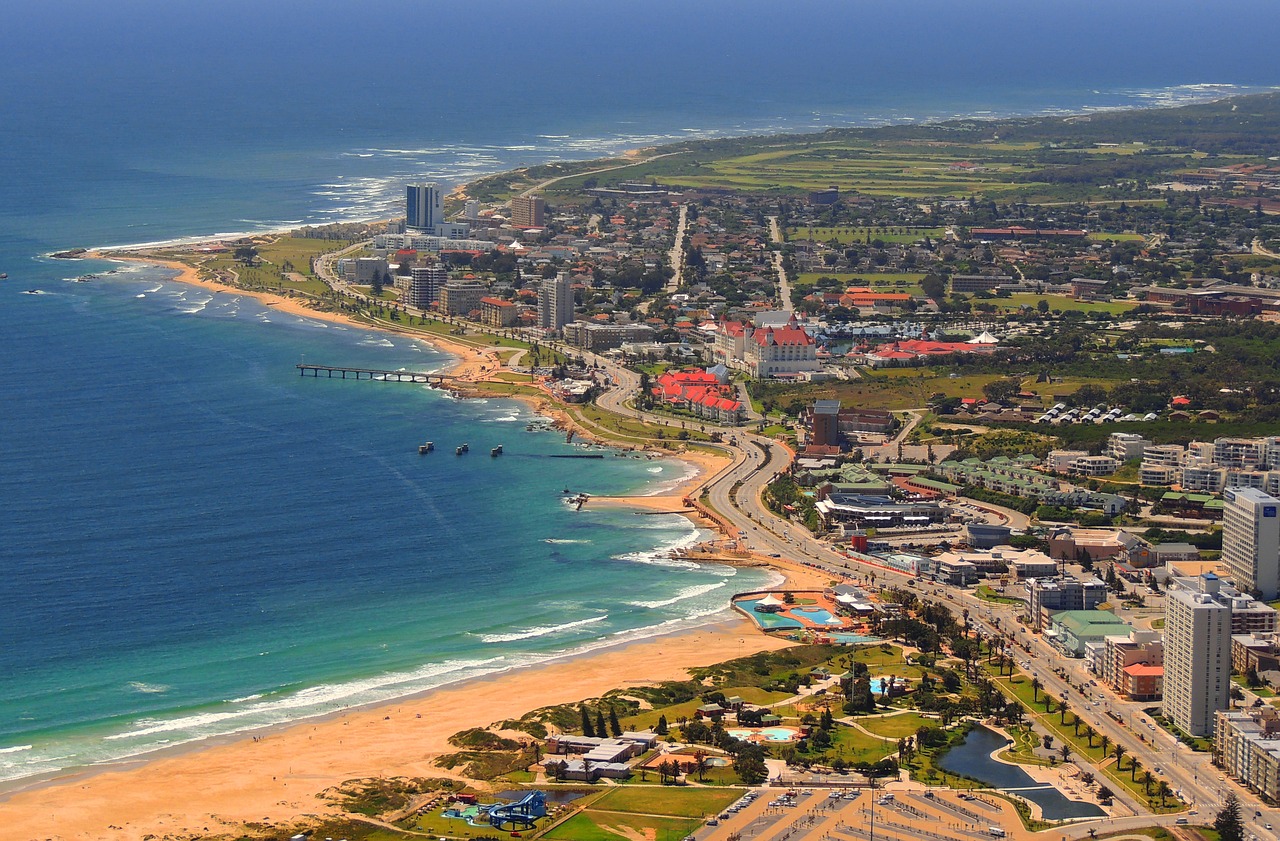
In Nelson Mandela Bay, sampling on 16 March 2026 found materially elevated contamination at New Brighton and Hobie beaches. At New Brighton, E. coli rose from 10 per 100 millilitres on 2 March to 4,360 on 16 March, more than eight times the benchmark, and enterococci also exceeded the limit. Hobie Beach recorded about 1,400, almost three times the benchmark. Other beaches tested better on the day, with Humewood, Pollock, Bluewater Bay and Wells Estate below the limit. Independent testing at sites on the Baakens and Chatty rivers showed signs of faecal contamination, nutrient stress and very low oxygen.
In Kouga, the municipality’s own data showed that final effluent from the Jeffreys Bay and KwaNomzamo wastewater treatment works remained non-compliant. In Buffalo City, Nahoon and Gonubie showed comparatively good microbiological conditions on the sampling day, a reminder that results vary from place to place and day to day.
A pattern, not an accident
The report does not declare every affected beach permanently unsafe, but it warns that water quality can deteriorate quickly, as the change at New Brighton within two weeks shows. Kings Beach in Gqeberha, one of the city’s best known, was closed in July 2025 after a sewer pipe failure in South End sent contamination into the stormwater system and onto the beach, and closed temporarily again in September 2025.
Eileen Carter, the commission’s Eastern Cape provincial manager, said the findings require further investigation, active monitoring and remedial action. Gary Koekemoer, chair of the Wildlife and Environment Society’s Eastern Cape branch, warned that swimmers could fall ill from the bacteria, and argued that none of Nelson Mandela Bay’s three coastal outfalls, at Fishwater Flats, Cape Recife and Driftsands, meets the required standards. He also called on the city to fill critical vacancies, appoint a permanent head of infrastructure and engineering and spend its infrastructure budget effectively.
What the commission ordered
The commission gave Buffalo City 14 days to submit an emergency intervention plan for West Bank and directed weekly water quality monitoring there until stable compliance is shown. Nelson Mandela Bay was given 30 days to submit a remedial action plan and a plan to investigate the sources of contamination at the Baakens and Chatty sites, with repeat monitoring for 12 months and disclosure of pump station failures, sewer overflows and treatment failures. Kouga and Nelson Mandela Bay were directed to improve treatment performance, monitoring and public risk communication.
The commission also called on the Department of Water and Sanitation, environmental authorities and the provincial government to consider regulatory and enforcement action, and required all respondents to submit measurable implementation reports with evidence, budgets, responsible officials and timelines. In one pointed line, it noted that plans and infrastructure projects are not proof of compliance.
Nelson Mandela Bay said it was planning an oversight visit to the affected areas and would brief the media afterwards. A DA member of the provincial legislature, Vicky Knoetze, said she would ask the provincial co-operative governance MEC to convene an infrastructure task team with a dedicated wastewater workstream.
Why it matters
The Eastern Cape findings echo the national picture. The 2025 Green Drop report found that the province’s share of wastewater systems in a critical state rose from 39 to 54 percent. They also echo the commission’s earlier work on the Vaal River and its 2026 inquiry into Gauteng’s water crisis. What is different here is the coastal dimension: polluted beaches threaten tourism, recreation and the image of cities that market themselves on their coastline.
The commission’s recommendations are specific and time-bound. The question, as always, is whether they will be followed. For residents and visitors, the practical advice is to watch for official water quality notices and avoid swimming near river mouths and stormwater outlets, especially after rain.
References
SAnews: SAHRC calls for action following wastewater pollution finding (29 July 2026): https://www.sanews.gov.za/node/83179
Daily Maverick: Nelson Mandela Bay sewage failure a human rights crisis (4 August 2026): https://www.dailymaverick.co.za/article/2026-08-04-nelson-mandela-bay-sewage-failure-a-human-rights-crisis/
AllAfrica: Nelson Mandela Bay sewage failure a human rights crisis (5 August 2026): https://allafrica.com/stories/202608050355.html
South African Human Rights Commission: SAHRC releases investigative report on wastewater pollution and recreational water quality in the Eastern Cape: https://sahrc.org.za/index.php/sahrc-media/news-2/item/4519-media-statement-sahrc-releases-investigative-report-on-wastewater-pollution-and-recreational-water-quality-in-the-eastern-cape
PMG: Green, Blue and No Drop Reports 2025, ministry briefing: https://pmg.org.za/committee-meeting/43264/