
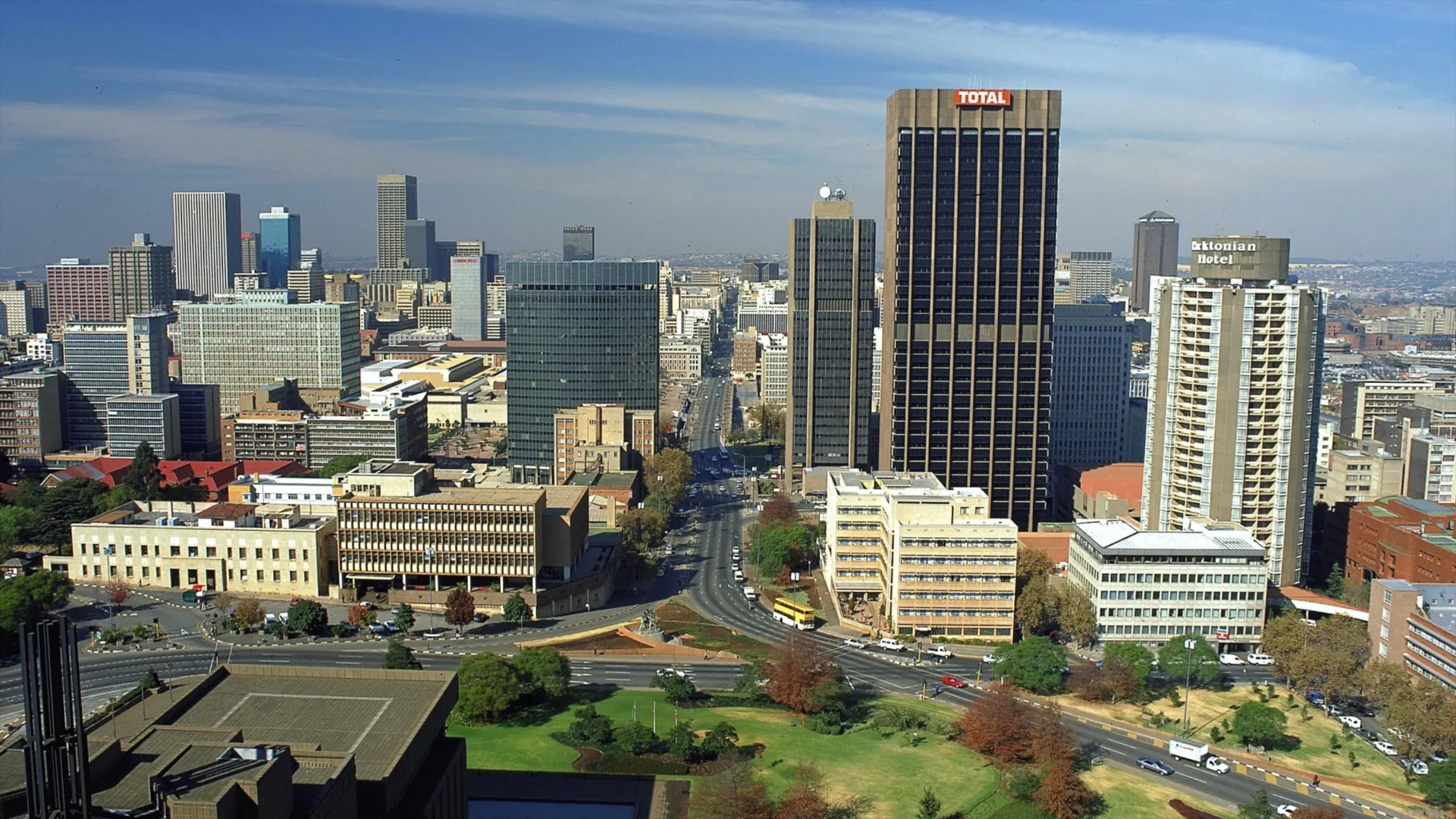
With local elections due in November, Johannesburg’s dry taps have become a political weapon. While poorer residents chase tankers, wealthier ones are drilling boreholes, and both responses carry a cost for the city.
Three months before South Africa’s local government elections, water has become one of the defining issues in the country’s largest city. A Reuters report published this week found Johannesburg residents across the income spectrum angry at the city’s failure to keep their taps running, and many saying they will punish the governing party at the polls. At the same time, the wealthy are increasingly opting out of the municipal system altogether.
The anger
In Hillbrow, some residents told Reuters they had gone without water for more than three years. Former ANC member Lindiwe Ndlovu said people were simply tired of the problems and would not vote for the party again. Her building was cut off in 2019 over non-payment, which residents say arose because a broken meter was never replaced and readings were estimated. A court ordered the water restored in May, but it had not been done by the time of the report.
Elsewhere in the city, Melville residents have gone more than 50 days without water this year, according to GroundUp. Between June 2025 and June 2026, Johannesburg recorded 50,536 water pipe leaks, an average of almost 140 a day. Recent failures at a temporary pump station and a power outage at a City Power substation on 11 August slowed recovery in parts of the city.
The political stakes are high. In the 2021 local elections, the ANC fell below 50 percent of the national vote for the first time since apartheid, and it lost its national majority less than three years later. Civic groups have campaigned under the slogan No Water, No Vote since late 2025.
Going off-grid
While poorer households queue at tankers, wealthier residents are increasingly building their own water systems. Albertus Lombaard of the Borehole Water Association estimates that Gauteng residents have drilled about 10,000 boreholes over the past decade. One Johannesburg lawyer told Reuters she spent about R100,000 on a borehole, storage tanks and filters, enough to keep her garden green and her pool full through the outages.
It is a pattern South Africans know from the electricity crisis, when households and businesses that could afford it installed solar panels and batteries. Analysts warn of the same risk: when those who can pay most opt out of municipal services, the municipality loses revenue it needs to repair the system for everyone else. Groundwater is also not unlimited, and unregulated drilling can deplete aquifers and draw in contamination.
The underlying failures
The reasons the taps run dry are well documented. Johannesburg Water says much of its infrastructure is more than 50 years old, and one senior manager admitted to Reuters that the utility is overwhelmed. Craig Sheridan of the University of the Witwatersrand’s Centre in Water Research and Development observed that maintenance tends to lose out to other spending priorities, because maintenance is not glamorous. The Auditor-General found in June that the city had lost R10.3 billion worth of water over four years through a failure to maintain its network.
Money remains the sharpest issue. GroundUp reports that about R3.4 billion was taken from Johannesburg Water’s account in June, leaving it with a zero balance and unable to settle about R1.8 billion in creditor debts. The council first approved ring-fencing the utility’s revenue in 2024, and the city says implementation began on 1 July, but Water and Sanitation Deputy Minister Jack Bloom has said it is unclear whether ring-fencing is actually happening in practice. In July, National Treasury withheld R3.6 billion in transfers from the city over financial management failures.
Tankers remain a costly stopgap. The city has spent at least R650 million on them over five years, and Johannesburg Water says it aims to run a fully internal tanker fleet by the end of the 2028/29 financial year.
What voters will be weighing
As the election approaches, parties will compete to convince voters that they can fix Johannesburg’s water. Residents will judge those promises against a long record: the R4 billion shortfall uncovered in 2025, the Human Rights Commission’s inquiry, the Auditor-General’s findings and their own experience of empty taps.
The off-grid trend adds another dimension. A city where the wealthy drill boreholes and the poor chase tankers is a city where the shared public water system is quietly being abandoned. Whoever governs Johannesburg after November will need to reverse that, by restoring trust that the municipal tap is worth paying for. That can only happen if the money residents pay for water is spent on water, and the pipes are finally maintained.
References
TimesLIVE (Reuters): Johannesburg’s water crisis angers voters, drives rich off-grid (11 August 2026): https://www.timeslive.co.za/news/south-africa/2026-08-11-johannesburgs-water-crisis-angers-voters-drives-rich-off-grid/
AllAfrica (GroundUp): Why do Joburg’s taps keep running dry? (14 August 2026): https://allafrica.com/stories/202608140372.html
GroundUp: Joburg watches R10-billion flow down the drain (24 June 2026): https://groundup.org.za/article/joburg-watches-r10-billion-flow-down-drain/
TimesLIVE: Treasury freezes R13.5bn, tells failing municipalities to pay debts first (8 July 2026): https://www.timeslive.co.za/politics/2026-07-08-treasury-freezes-r135bn-tells-failing-municipalities-to-pay-debts-first/
Business Report: Despite crippling water issues, Morero insists Johannesburg is G20-ready (2 November 2025): https://businessreport.co.za/news/politics/2025-11-02-despite-crippling-water-issues-morero-insists-johannesburg-is-g20-ready/