
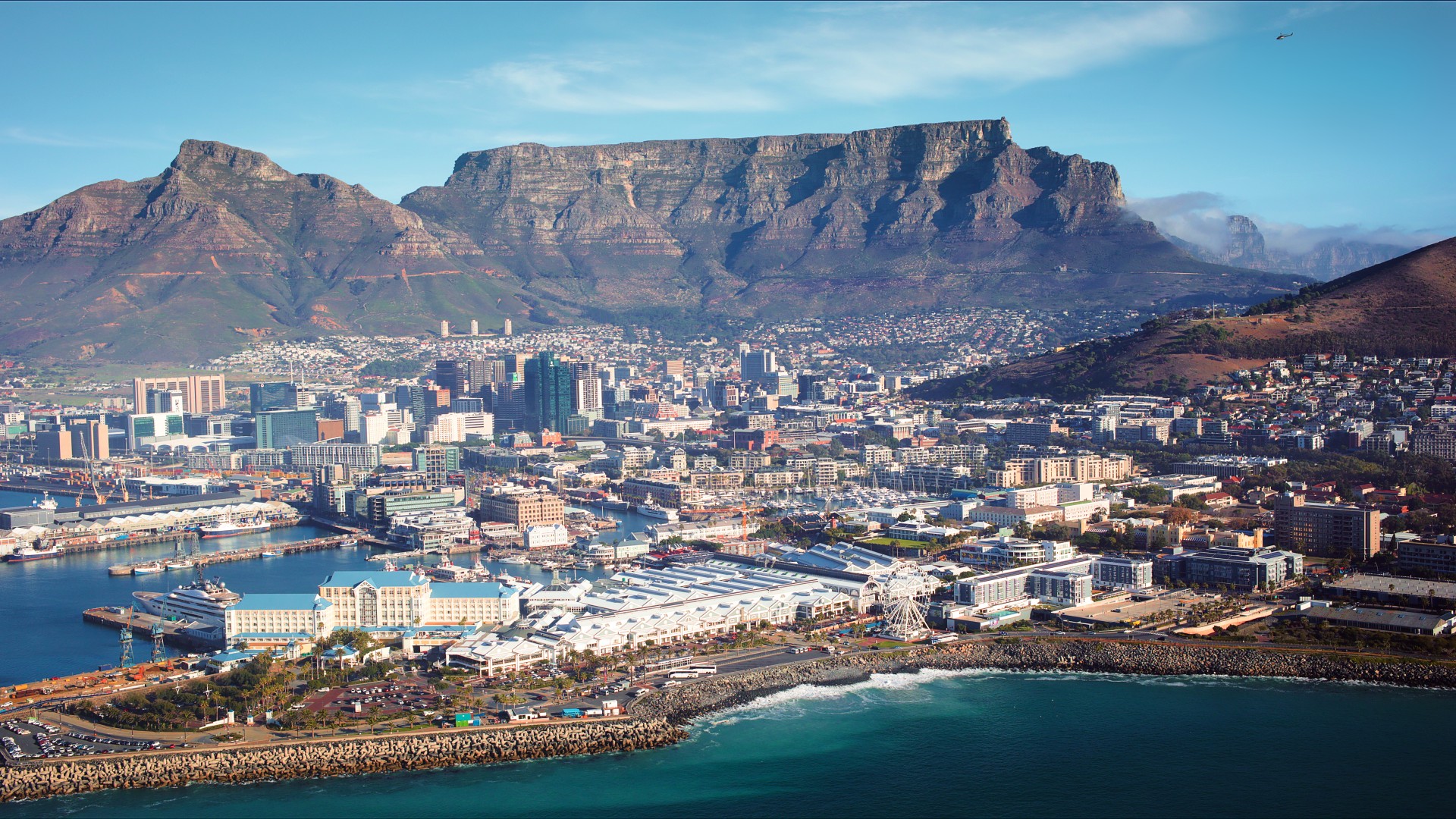
Cape Town has committed R5.39 billion this year to water and sanitation infrastructure, including the country’s largest sewer upgrade. It is a case study in what happens when a city treats pipes as a priority.
While much of the country’s water news this year has been about failing networks and missing money, Cape Town has been quietly doing something different: spending heavily, and consistently, on the infrastructure that keeps water flowing and sewage contained. In its 2026 budget, which the city calls its Budget of Hope, Cape Town has allocated R5.39 billion in capital investment for water and sanitation infrastructure, with the programme running from 1 July 2026.
The country’s biggest sewer upgrade
The flagship project is the rehabilitation of the Cape Flats bulk sewer, a R1.35 billion programme to restore 28 kilometres of bulk sewer pipelines across the Cape Flats. The city describes it as South Africa’s largest sewer upgrade project, and by late 2025 it was nearing the halfway mark. Bulk sewers like these carry wastewater from hundreds of thousands of homes to treatment works. When they collapse, raw sewage floods streets and rivers, as has happened in so many other cities.
The Cape Flats project is one of many. The city is investing about R430 million in upgrading the Helderberg sewer system, and has commissioned an upgrade of the Montague bulk sewer. Repairs to the Makhaza bulk sewer have been completed, emergency repairs were carried out on a collapsed 700 millimetre pipeline in Khayelitsha earlier this year, and 100-year-old bulk water mains in Philippi and Browns Farm are being replaced. Work continues on sewer, wastewater and flood alleviation projects in Strand and the Helderberg area.
Spending what is budgeted
Allocating money is only half the battle. The other half is actually spending it on time. In 2024/25, Cape Town’s water and sanitation directorate spent 94.1 percent of its capital budget. That stands in sharp contrast to the many municipalities that return unspent grants, or whose projects stall because contractors go unpaid.
Mayor Geordin Hill-Lewis has argued that the only way for Cape Town to avoid the crises that have befallen other South African cities is to invest in infrastructure at a much higher level. The city’s results suggest that argument has substance. In the 2025 Blue Drop progress assessment, the Western Cape had 93 percent of its drinking water systems at low risk and none at critical risk. In the 2025 Green Drop awards, two Western Cape municipalities, George and Mossel Bay, took second and third place nationally.
Not without its problems
Cape Town is not a water utopia, and it would be wrong to present it as one. The Western Cape’s Green Drop results regressed in 2025, partly because of stricter rules on effluent quality and sludge. Sewage pollution in waterways such as the Diep River estuary and Milnerton lagoon has drawn sustained criticism from residents, scientists and activists, who point to the Potsdam wastewater works as a major source. The city is upgrading Potsdam, but the work has taken years.
Those challenges are real. But the difference is that in Cape Town, the problems are being met with funded, measurable, mostly on-schedule projects, rather than with promises.
Lessons for Gauteng
The contrast with Johannesburg is instructive. Johannesburg Water needs more than R27 billion to clear its infrastructure backlog but has had a capital budget of around R1.7 billion. The Auditor-General has found that Johannesburg spends about half the required level on maintenance and has lost more than R10 billion worth of water in four years. Cape Town, with a smaller population, is putting more than three times as much into water and sanitation capital spending this year.
The lesson is not that one city is better run than another for any single reason. It is that sustained, ring-fenced investment in water infrastructure, combined with the capacity to spend it, produces results. Pipes replaced on schedule do not burst. Sewers rehabilitated before they collapse do not flood streets. Treatment works maintained properly do not pollute rivers.
Why this is good news
Good news in the water sector is often about avoiding bad news: the crisis that did not happen, the sewer that did not collapse, the outage that never came. Cape Town’s R5.39 billion programme is that kind of good news. It shows that a South African metro can plan, fund and deliver large-scale water infrastructure, and that residents benefit when it does.
For other cities, the challenge is to match not just the budget but the discipline behind it: collecting revenue, ring-fencing it for water, spending it on time and maintaining what is built. That is the formula the Water Services Amendment Bill is trying to make law. Cape Town is showing that it can be done.
References
City of Cape Town: Budget of Hope powers R5.39 billion capital investment in water and sanitation infrastructure (16 July 2026): https://www.capetown.gov.za/Media-and-news/_qd37b1155c6b9
City of Cape Town: Media and news, water and sanitation updates: https://www.capetown.gov.za/Media-and-news/_q710ed56cb4d9
GroundUp: Is Cape Town’s mayor winning the war on sewage?: https://groundup.news/article/is-cape-town-mayor-winning-the-war-on-sewage/
Citizen (Mpumalanga News): Steve Tshwete crowned Green Drop champion (9 April 2026): https://www.citizen.co.za/mpumalanga-news/news-headlines/local-news/2026/04/09/mpumalangas-steve-tshwete-local-municipality-crowned-green-drop-champion/
GroundUp: Joburg watches R10-billion flow down the drain (24 June 2026): https://groundup.org.za/article/joburg-watches-r10-billion-flow-down-drain/