
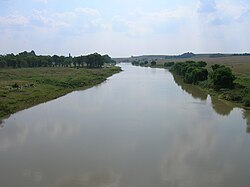
Emfuleni’s water and sanitation services have been handed to a new ring-fenced utility. After years of raw sewage, inquiries and interventions, the Vaal River’s future may depend on whether it works.
On Friday 14 November 2025, the Department of Water and Sanitation launched a new company to run water and sanitation services in Emfuleni Local Municipality, at an event in Vanderbijlpark. The Vaal Corporation Water Utility, formed as a partnership between Rand Water Services and Metsi-a-Lekwa, Emfuleni’s own water and sanitation unit, will take full responsibility for managing, operating and rehabilitating every water and sanitation system in the municipality.
On paper it is an administrative reshuffle. In practice it is the latest, and possibly the most ambitious, attempt to solve one of South Africa’s longest-running pollution crises. For more than a decade, sewage from Emfuleni’s broken pipes, pump stations and treatment works has flowed into the streets of Sebokeng, Evaton and Vereeniging, and from there into the Vaal River, the most important water system in Gauteng.
A river polluted beyond acceptable standards
The scale of the problem was laid out in detail by the South African Human Rights Commission. After a stream of media reports in 2018 showed raw sewage running through homes, schools and public spaces in Emfuleni, the commission launched a provincial inquiry into the sewage problem of the Vaal. Its final report, released in February 2021, found that the Vaal had been polluted beyond acceptable standards, and that the main cause was untreated sewage entering the river from wastewater treatment works that had fallen into disrepair.
The inquiry heard from National Treasury that roughly 19 million people depend on the Vaal system for drinking water and for domestic and commercial use. Treasury also pointed out that pollution in the Vaal undermines the benefits of the Lesotho Highlands Water Project, one of the most expensive pieces of water infrastructure the country has ever built. Clean water transferred at great cost from the mountains of Lesotho was, in effect, being mixed with sewage downstream.
The commission found extensive non-compliance with the law across all spheres of government, warned that indigenous species such as the Vaal’s yellowfish were under threat, and recommended that Emfuleni be placed under administration. Later that year, residents and activists along the river reported fish dying in large numbers after fresh spills, and Rand Water’s own water quality monitoring recorded E. coli counts near the Emfuleni treatment plants of more than 240,000 per 100 millilitres, many times higher than levels considered safe for contact.
Years of interventions
National government has been trying to fix Emfuleni for years. Using Section 63 of the Water Services Act, which allows the minister to step in when a municipality fails to provide services, the department directed Rand Water to support the municipality. The work, funded through the department’s Regional Bulk Infrastructure Grant, included unblocking sewer lines, refurbishing critical pump stations, supplying vehicles, tools and security, and building up the capacity of the municipality’s own water and sanitation staff.
The department has credited the intervention with a marked drop in sewage spills into communities and an improvement in the quality of effluent leaving the treatment works. It has also acknowledged that the larger task remains: upgrading the capacity of wastewater treatment works such as Sebokeng, Leeuwkuil and Rietspruit, which were built for a much smaller population and struggle to cope with today’s volumes.
The municipality’s own track record has not inspired confidence. In April 2025, The Star reported that Emfuleni had spent more than R200 million on sewage repairs between 2019 and 2024, appointing 71 different service providers along the way, while residents continued to live with sewage in their streets. A year earlier, AfriForum laid criminal charges against the municipal manager over sewage being discharged into the Vaal, and residents were at one point told to boil their water after a collapsed sewer line raised fears of contamination. Larger plans, such as a regional sewer scheme for southern Gauteng announced years ago, were scaled back or delayed, leaving temporary fixes in place of lasting solutions.
What the new utility is meant to do
The Vaal Corporation Water Utility is designed to break that cycle. Emfuleni remains the water services authority, responsible for oversight and for setting policy, but the new company becomes the water services provider, running the day-to-day operation of the system. Emfuleni’s council approved the creation of the company earlier in the year, after the plan received backing from Water and Sanitation Minister Pemmy Majodina and Finance Minister Enoch Godongwana.
The company is expected to stabilise operations, rehabilitate key infrastructure, improve revenue management and put systems in place that respond to community needs. Deputy Minister David Mahlobo described it as “not a bailout or a temporary fix”, presenting it instead as a long-term structural answer to decades of failing systems, neglected infrastructure and weak institutions. He also warned residents against vandalism, illegal connections and other crimes targeting water infrastructure, and called on labour, business, civil society and faith-based organisations to support the recovery.
The department has linked the model directly to the Water Services Amendment Bill and to the second phase of Operation Vulindlela, the reform programme run by the Presidency and National Treasury. Both push towards professional, ring-fenced water service providers that keep their revenue separate from general municipal spending and are held accountable for clear technical standards.
Follow the money
The financial case for ring-fencing is stark. According to the department, Emfuleni has been losing around 75 percent of its water as non-revenue water, meaning that three out of every four litres it buys from Rand Water are lost to leaks, illegal connections, faulty meters or unpaid bills. A water service that cannot recover the cost of most of the water it distributes cannot pay its bulk supplier, cannot maintain its pumps and cannot upgrade its treatment works. The sewage in the Vaal is, in that sense, the end product of a broken revenue model.
A ring-fenced utility changes the incentives. If the money paid by Emfuleni households and businesses for water and sanitation stays inside the utility, it can be reinvested in the network rather than absorbed into the municipality’s wider budget. This is the same issue now at the centre of a heated dispute in Johannesburg, where billions owed to Johannesburg Water by the city have become a national political controversy.
What to watch
The launch is a beginning, not a result. Several questions will decide whether the Vaal Corporation Water Utility succeeds where earlier efforts fell short. The first is independence: whether municipal politics will allow the company to make operational and financial decisions without interference. The second is capital: refurbishing pump stations is one thing, but expanding treatment works to handle Emfuleni’s growing population will require substantial investment over many years. The third is revenue: reducing non-revenue water depends on fixing leaks, replacing meters and persuading residents that paying for water will bring a reliable service in return. The fourth is transparency: residents, downstream users and civil society will need regular, public reporting on spills, effluent quality and spending to judge whether the model is working.
The stakes reach far beyond Emfuleni. Farmers, towns such as Parys and communities further down the Vaal all live with the consequences of what flows out of Gauteng’s southern edge. For the MAP Forum, which grew out of work on the Moreleta, Apies and Pienaars rivers in Tshwane, the experiment matters too. Many municipalities face the same combination of failing treatment works, weak finances and polluted rivers. If a ring-fenced utility can turn Emfuleni around, it offers a template that could be used elsewhere. If it cannot, the Vaal will remain a warning about what happens when sewage infrastructure is allowed to fail for a generation.
References
Engineering News: New special-purpose vehicle launched to tackle Emfuleni water challenges: https://www.engineeringnews.co.za/article/new-spv-launched-to-tackle-emfuleni-water-challenges-2025-11-28
Department of Water and Sanitation: Media advisory on the launch of the Emfuleni special purpose vehicle (12 November 2025): https://www.dws.gov.za/Communications/MediaAdvisory/2025/MA%20-%20Minister%20Majodina%20to%20launch%20the%20newly%20established%20Special%20Purpose%20Vehicle%20responsible%20for%20water%20and%20sanitation%20services%20in%20Emfuleni%20Local%20Muni.pdf
South African Human Rights Commission: Final Report of the Gauteng Provincial Inquiry into the Sewage Problem of the Vaal River (February 2021): https://sahrc.org.za/home/21/files/The%20Vaal%20Inquiry%20Final%20Report_17022021.pdf
Daily Maverick: Vaal River sewage contamination a crisis, human rights violation and liability to the state (February 2021): https://www.dailymaverick.co.za/article/2021-02-17-vaal-river-sewage-contamination-a-crisis-human-rights-violation-and-liability-to-the-state-commission-finds/
Daily Maverick: Emfuleni residents fed up with Vaal River pollution inertia (October 2021): https://www.dailymaverick.co.za/article/2021-10-29-a-story-of-south-africa-emfuleni-residents-fed-up-with-vaal-river-pollution-inertia/
SAnews: Major progress in addressing Emfuleni water and sanitation challenges: https://www.sanews.gov.za/node/75102
The Star: Emfuleni residents still trapped in sewage mess as R200 million goes down the drain (April 2025): https://iol.co.za/the-star/news/2025-04-10-emfuleni-residents-still-trapped-in-sewage-mess-as-r200-million-goes-down-the-drain/
Sunday World: Emfuleni forms firm to help struggling municipality deliver water: https://sundayworld.co.za/news/emfuleni-forms-firm-to-help-struggling-municipality-deliver-water