
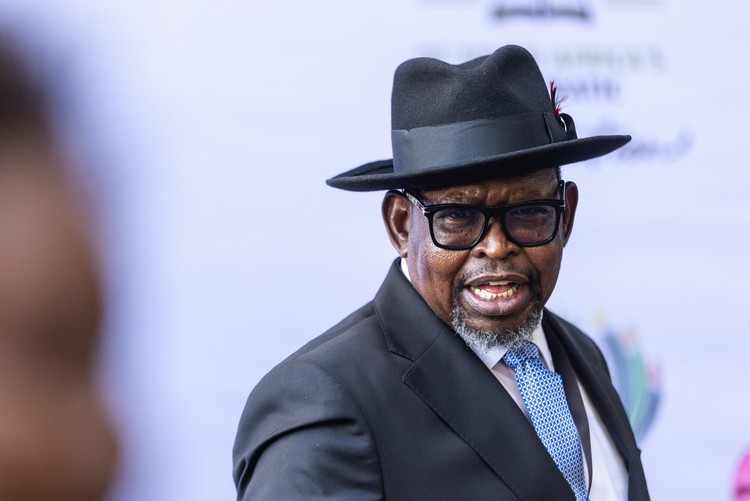
The President has put himself at the head of a new National Water Crisis Committee, backed by R156 billion in infrastructure spending and criminal charges against 56 municipalities. The question now is whether it can do for water what a similar committee did for electricity.
In his State of the Nation Address on Thursday 12 February 2026, President Cyril Ramaphosa did not declare the national disaster that civil society and the Human Rights Commission had called for. Instead, he announced that he would personally chair a new National Water Crisis Committee, designed to bring existing efforts into a single coordinating body and to deploy national technical experts and resources to municipalities that are failing to deliver water.
It was the most significant attention a President has given to water in a State of the Nation Address in years, and it signals that the government now sees the water crisis as a threat on the same scale as the electricity crisis that dominated earlier addresses.
What was announced
The committee is modelled on the National Energy Crisis Committee, the structure the President used to coordinate the response to load shedding. Ramaphosa takes over oversight of water from Deputy President Paul Mashatile, who chaired a water task team set up in 2024. The committee’s job is coordination across all spheres of government and rapid deployment of help where municipalities cannot cope.
The President also set out the money behind the plan. He said the government has committed more than R156 billion in public funding for water and sanitation infrastructure over the next three years, and pointed to major projects such as the second phase of the Lesotho Highlands Water Project and the Ntabelanga Dam in the Eastern Cape. A further R54 billion incentive is meant to encourage municipalities to improve water, sanitation and electricity services and to direct revenue into reservoirs, pumps and pipes. He said the government is in the final stages of establishing the National Water Resource Infrastructure Agency, a state-owned entity created by legislation passed in 2024 to manage and finance national water infrastructure.
Tough talk on municipalities
The sharpest part of the address dealt with accountability. Ramaphosa blamed poor municipal planning and inadequate maintenance for supply failures, and said the core challenge is not a lack of water but getting it from dams to taps. He criticised municipalities that divert water revenue to other purposes instead of maintaining infrastructure, an implicit reference to cases such as the R4 billion owed by the City of Johannesburg to Johannesburg Water.
He revealed that government has already laid criminal charges against 56 municipalities that failed to meet their obligations, and said municipal managers could face personal charges for breaking the National Water Act. He also said national government would use its constitutional powers and those in the Water Services Act to intervene where necessary, and highlighted the Water Services Amendment Bill, which would allow government to hold providers to account and withdraw licences from those that miss their targets.
Mixed reactions
The response from political parties was predictably divided. The ANC’s Nomvula Mokonyane, a former water minister, called the planned amendments to water services law a major breakthrough and argued that the country has enough water, but that local government has failed to maintain infrastructure. The DA’s John Steenhuisen blamed ANC mayors and cadre deployment, arguing that the crisis will not be fixed until voters remove the ANC from power in municipalities.
The Freedom Front Plus said the fact that the President had to take charge personally was telling, a sign that things were close to being out of control. GOOD’s Brett Herron welcomed the move, saying responsibility ultimately rests with the President, and stressed the urgency for Johannesburg residents who had gone weeks without water. ActionSA’s Herman Mashaba called the announcement too little, too late, while the IFP said the commitments would mean nothing unless ministers and departments acted on them. Several commentators pointed out that at least three national interventions on Gauteng’s water crisis have been announced since 2023 without solving it.
Lessons from the energy committee
The comparison with electricity is instructive. The National Energy Crisis Committee, set up in 2022, is widely credited with helping to end load shedding by cutting red tape, opening the electricity market to private generators and keeping pressure on Eskom. But the energy crisis had a clear central actor in Eskom and a clear market-based solution in private generation.
Water is harder. Responsibility is spread across a national department, water boards and 144 water services authorities, most of them municipalities with their own councils and politics. The infrastructure that is failing, from reservoirs to sewer pipes, cannot simply be replaced by private investment, and much of it depends on municipalities collecting revenue and spending it properly. A presidential committee can coordinate, fund and pressure, but it cannot directly run a municipal water network.
What would success look like?
The committee will be judged by results that residents can see: fewer outages, faster repairs, reservoirs that stay full and sewage works that stop polluting rivers. Clear public reporting would help. The energy committee published regular updates on progress, and a similar approach for water, with targets for leak reduction, maintenance spending and wastewater compliance, would allow citizens and the media to track whether the promises are being kept.
The announcement also sets up a test for the year ahead. Local government elections are due later in 2026, and water will be one of the issues voters care most about. If the committee can show concrete improvement in places like Johannesburg before the election, it will strengthen the case that national coordination works. If it becomes another layer of meetings, it will add to the frustration that has driven residents onto the streets. For now, the President has made water his personal responsibility. That alone raises the stakes.
References
Bizcommunity: President announces crisis committee to tackle SA’s water challenges (13 February 2026): https://www.bizcommunity.com/article/president-announces-crisis-committee-to-tackle-sa-water-challenges-062445a
BusinessTech: New state-owned entity coming to South Africa (February 2026): https://businesstech.co.za/news/government/850851/new-state-owned-entity-coming-to-south-africa/
Daily Maverick: GNU parties welcome Ramaphosa’s water committee but question implementation (13 February 2026): https://www.dailymaverick.co.za/article/2026-02-13-gnu-parties-welcome-ramaphosas-water-committee-but-question-implementation/
Engineering News: Mixed political reactions to water crisis committee announced during SONA (13 February 2026): https://engineeringnews.co.za/article/mixed-political-reactions-to-water-crisis-committee-announced-during-sona-2026-02-13
Polity: SONA 2026, Ramaphosa builds castles in the air with another task force to tackle water crisis (13 February 2026): https://www.polity.org.za/article/sona-2026-ramaphosa-builds-castles-in-the-air-with-another-task-force-to-tackle-water-crisis-2026-02-13