
How modular, on-site systems are helping relieve strain on ageing networks and remote communities
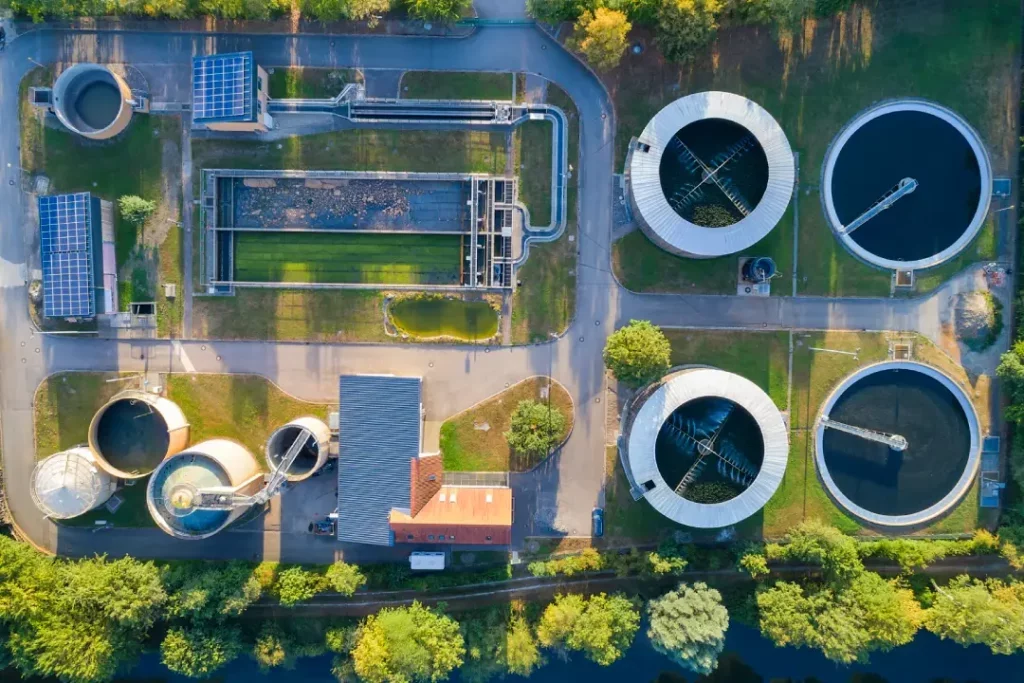
Example of a modular treatment plant servicing a local community.

Introduction
South Africa faces immense challenges in water service delivery: ageing centralised networks, frequent system failures, and vast rural and peri-urban areas that lack adequate infrastructure. Against this backdrop, decentralised water treatment systems (modular, on-site, locally managed) are gaining traction as a complementary solution. These systems, often scalable and modular, can reduce dependence on long pipelines, bypass weak nodes, and increasingly allow reuse close to source.
In this article, we examine innovations in decentralised systems, highlight local and international case studies, and consider how South Africa’s Department of Water and Sanitation (DWS) and municipalities can accelerate adoption.
What Is Decentralised Water Treatment?
- Systems located near or at the point of use (industrial site, township, housing development)
- Operate at small or medium scale, often modular or containerised
- May treat wastewater, greywater, or potable water, depending on configuration
- Reduce reliance on long-distance conveyance and major centralized treatment works
Advantages often cited include lower capital cost for remote locations, modular scalability, resilience (localized failure doesn’t cascade), and opportunities for water reuse (toilet flushing, irrigation, process water) close to demand centers. Smart Water Magazine+1
Local & International Case Studies
NuWater (South Africa)
NuWater is deploying smart, scalable decentralised treatment systems which can be rapidly installed in underserved areas. Their model includes remote monitoring, modular expansion, and blending treated effluent for non-potable reuse or augmentation of potable supply. iDraw A Water
CSIR’s Chemical-Free Modular Sanitation / Treatment
The Council for Scientific and Industrial Research (CSIR) has developed modular packaged systems for small communities, prisons, schools, and rural areas. These systems can treat wastewater without heavy chemical dosing, aiming for reuse or safe discharge standards. CSIR
Western Cape Decentralised MBR Effluent Reuse
A study evaluated three decentralised membrane bioreactor (MBR) installations in the Western Cape and their ability to produce effluent reusable for non-potable applications. The study found that decentralised reuse is technically viable, particularly in water-constrained contexts. IWA Publishing
Llembe, KwaZulu-Natal
A “decentralised sewage treatment plant” was implemented in Llembe to service a rural/peri-urban community. It offers lower cost, easier maintenance, and avoids the need to build long new sewer networks. BioMicrobics
Challenges & Risks
- Regulation & permitting: Existing regulations often assume centralized systems; on-site systems may fall into regulatory gaps.
- Technical design & maintenance: Modules must be robust, easy to operate, and resistant to local power or operational constraints.
- Public trust & acceptance: Treated water must clearly meet safety standards.
- Cost scaling: In very low-density areas, per-unit cost may still be high unless there’s aggregation or shared infrastructure.
- Monitoring and oversight: Ensuring that decentralized systems maintain consistent performance requires oversight, sensor systems, telemetry.
How DWS & Water Authorities Can Support Scaling
- Regulatory adaptation
DWS should fast-track or publish guidance frameworks for modular, point-of-use systems (drinking, non-potable, hybrid) that define permitting thresholds, safety standards, and monitoring requirements. - Incentives & subsidies
Provide grants or soft financing for municipalities or housing developers to pilot modular systems, especially in underserved or remote areas. - Standardised modular frameworks
Develop or certify modular “plug-and-play” units (size, capacity, safety) for broad replication. - Shared data & monitoring platforms
Use national water quality and monitoring systems (e.g. WMS, RQIS) to integrate data from decentralized systems for oversight and trend analysis. Department of Water and Sanitation+1 - Partnerships & capacity building
Encourage partnerships with universities, private companies, NGOs to design, maintain, and monitor systems. Build local operations & maintenance capacity in municipalities.
Sidebar: Decentralised vs Centralised — Trade-offs at a Glance
| Aspect | Centralised Systems | Decentralised Systems |
|---|---|---|
| Capital cost per unit (large scale) | More economic in dense areas | Better for remote / low-density areas |
| Risk of cascading failure | High (single point failures disrupt many) | Lower (failure is local) |
| Transport / pumping energy | Higher (long pipelines) | Lower (local treatment) |
| Flexibility & scalability | Hard to expand modularly | Easier module addition |
| Oversight challenge | Established regulatory & monitoring systems | New oversight models needed |
Infographic / Visual Ideas
- Diagram: “Decentralised Treatment in Urban Fabric” — show houses, small modules, reuse loops (toilet, irrigation)
- Flow chart: Typical process train (screening → biological reactor → disinfection → reuse / discharge)
- Bar chart / Map: Number of pilot modular systems active by province
Future Outlook & Recommendations
- South Africa is ripe for modular water innovation — many infrastructure backlogs and underperforming central works create space for decentralised injection.
- DWS should adopt adaptive regulation to allow safe scaling, while promoting hybrid systems (central + local) in high-stress zones.
- Municipalities should pilot, monitor, and refine modular deployments, with built-in telemetry and transparent reporting.
- Over time, economies of scale, competition, and standardisation will bring costs down — shifting the balance toward modular systems for more locales.
Conclusion
Decentralised treatment is not a panacea — but it is a powerful tool in South Africa’s water management toolbox. When deployed wisely, modular and local systems can relieve pressure on large networks, support reuse close to demand, and catalyse innovation at the grassroots. The key to success will be regulation, oversight, local capacity, and strong integration with national water management systems.
Sources & Further Reading
- Smart Water Magazine — “Decentralised solutions: the answer to South Africa’s water crisis.” Smart Water Magazine
- Business Report — “Water treatment in South Africa: the unseen crisis … needs scalable action.” Business Report
- CSIR — “Sustainable wastewater management, modular systems” CSIR
- IWAonline / WISA — “Water reuse options for decentralised MBR effluents.” IWA Publishing
- DWS — Water Management System (WMS), RQIS integration. Department of Water and Sanitation