
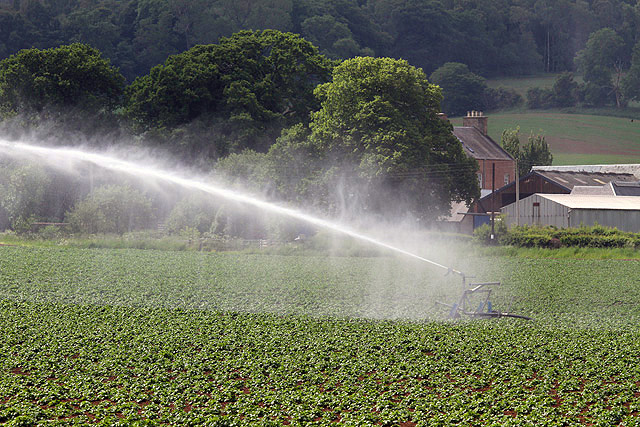
The African Union has made water and sanitation its theme for 2026, and South Africa has embraced it. The declaration puts water at the centre of the continent’s development agenda, and gives South Africa a chance to lead.
Every year, the African Union chooses a theme to focus the continent’s attention. For 2026, it chose water. At its 39th ordinary session in Addis Ababa on 14 February 2026, the AU Assembly adopted the theme Assuring Sustainable Water Availability and Safe Sanitation Systems to Achieve the Goals of Agenda 2063. In plain terms, the continent’s leaders have agreed that water and sanitation are not side issues but foundations of development, health and prosperity.
On 5 June 2026, at the inaugural Council of Ministers meeting of the Incomati and Maputo Watercourse Commission in Boksburg, Water and Sanitation Minister Pemmy Majodina formally welcomed the declaration on behalf of South Africa, describing it as recognition that water security is fundamental to Africa’s development goals.
Why water, and why now
The AU’s case for the theme is striking. It notes that three out of four jobs in Africa depend on water, and that up to 80 percent of the illnesses that reduce workers’ productivity are linked to poor hygiene and sanitation. Waterborne diseases remain a leading cause of death on the continent, and water scarcity is increasingly cited as a driver of migration.
The theme sets out a broad set of aims: adopting the Africa Water Vision 2026, building climate-resilient water security by managing water together with energy, food and ecosystems, expanding safe sanitation in rural and underserved urban areas, improving cooperation on shared rivers and lakes, and attracting investment in water infrastructure. It also calls for a new narrative that presents water not only as a problem to be solved but as a driver of growth, jobs and industrialisation, and for the full involvement of communities, young people and women.
The AU document does not set specific numerical targets. Instead, it says the AU is developing an implementation strategy and calls on member states to adopt robust policy frameworks and monitor their progress.
South Africa’s message
Majodina used the occasion to argue that water must be treated as a strategic development priority rather than simply an environmental concern. She called for stronger investment in water infrastructure, protection of water resources and adaptation to climate change, warning that climate change, urbanisation, population growth and rising demand are placing ever greater pressure on water, with droughts and floods becoming more frequent.
She also made the case for regional cooperation, noting that rivers do not recognise borders. South Africa reaffirmed its commitment to the Incomati and Maputo Watercourse Commission, which brings it together with Mozambique and Eswatini to manage the rivers they share, and announced that it will co-host, with France, an upcoming global dialogue on water investment, aimed at mobilising partnerships and finance.
A natural leader, with homework to do
South Africa is well placed to play a leading role in the Year of Water. It has some of the most sophisticated water legislation in the world, a long record of managing shared rivers through treaties such as those for the Lesotho Highlands and the Komati basin, strong research institutions such as the Water Research Commission, and engineering expertise that is in demand across the continent.
But the year also holds up a mirror. The AU’s focus on safe sanitation comes as South Africa’s own Green Drop report shows that 47 percent of municipal wastewater systems are in a critical state. Its emphasis on investment and maintenance coincides with record municipal debts to water boards and a national water loss rate of about 47 percent. South Africa can only lead credibly on water if it is seen to be fixing its own systems.
Why this is good news
There are reasons for optimism. A continental focus on water brings political attention, donor interest and investment opportunities that can benefit South African projects and companies. The emphasis on shared rivers strengthens institutions like the Incomati and Maputo commission, which help prevent conflict and coordinate responses to drought and flood. The call to involve communities, young people and women aligns with the citizen science and local stewardship that organisations like the MAP Forum have championed for years.
Most importantly, the Year of Water reframes the conversation. Rather than treating water only as a crisis, it treats it as an opportunity, a foundation for health, jobs, food security and peace. For a country that has spent much of the past year talking about dry taps and polluted rivers, that is a perspective worth embracing. The challenge for the rest of 2026 is to turn the theme into projects that deliver, at home and across the continent.
References
SAnews: South Africa welcomes AU’s Year of Water declaration (June 2026): https://www.sanews.gov.za/node/81998
African Union Southern Africa Regional Office: Theme of the Year 2026 underscores the critical importance of water and sanitation (April 2026): https://saro.au.int/sites/default/files/files/2026-04/themeoftheyear2026underscoresthecriticalimportanceofwaterandsanitationf.pdf
Ground News: South Africa welcomes AU’s Year of Water declaration (9 June 2026): https://ground.news/article/south-africa-welcomes-aus-year-of-water-declaration
SAnews: South Africa and Eswatini sign revised Komati River Basin treaty (16 March 2026): https://www.sanews.gov.za/node/80227
SAnews: Majodina calls for accountability and collective action to protect water resources (1 April 2026): https://www.sanews.gov.za/node/80576